Investigating species invasion patterns and processes across broad spatial scales
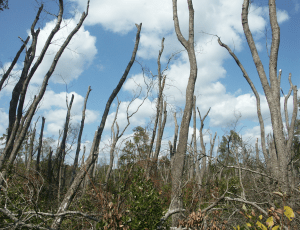
SUMMARY: Biological invasions pose a major threat to forest ecosystems globally and cause significant ecosystem degradation and economic loss. Research has revealed variation in regional invasion patterns, indicating that the factors affecting invasion dynamics vary across scales and among taxonomic groups. Many small-scale studies have focused on invasion processes and impacts, while only a few have encompassed broader regions. Our understanding about the factors influencing broad-scale invasion patterns is therefore limited. More research needs to include multiple taxonomic groups, to account for the interactions among the three invasion components (invader, recipient system, and environmental drivers), and to consider the spatial and temporal scales of invasion patterns and processes.
I cooperate with several other scientists to address these research needs, working to understand the patterns and processes of biological invasions, across regional, national, and international scales. Our goal is to enhance our understanding of invasive species dynamics and impacts across scales, particularly relating to where invasive plants and tree occur in U.S. forests, and the socioeconomic and environmental factors associated with those invasions. The results assist in future invasive species prediction, proactive policy making, and invasive species management. Our work has received international attention both in the invasive ecology community and in the media.
LINKS:
- United States forests are increasingly invaded by problematic non-native plants (Potter et al. 2026)
- Forest plant invasions in the eastern United States: evidence of invasion debt in the wildland-urban interface (Potter et al. 2024)
- Landscape correlates of forest plant invasions: A high-resolution analysis across the eastern United States (Riitters et al. 2018)
- Exposure of protected and unprotected forest to plant invasions in the eastern United States (Riitters et al. 2018)
- Invasive Species in Eastern Forests: Extent, Impact, and Response
- How Tree Diversity Regulates Invading Forest Pests
CONTACT: Kevin Potter, kevin.potter@usda.gov or (919) 281-1971

 Kevin Potter Ecology